

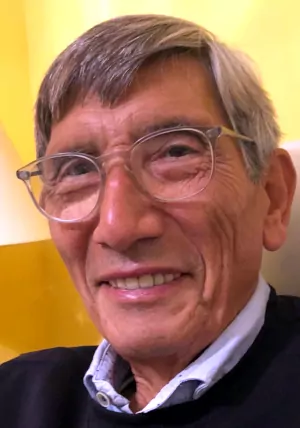
Enric Canela
Enric Canela, Emeritus Professor of Biochemistry and Molecular Biology at the University of Barcelona and collaborator of the Royal European Academy of Doctors (READ), shares with the academic community his most recent articles published on his blog enriccanela.cat, a popular science platform devoted to health and well-being, as well as his latest contribution to the newspaper “El Punt-Avui”, where he focuses on education and research. Specifically, these include the blog posts “Genesis of Atherosclerosis”, “Tea, the Queen of Infusions”, and “Lactose Intolerance”, together with the opinion piece “Rethinking the University”, published between December 29 and January 28.
The expert has also recently shared the articles “Living with the Sun”, “The Age of the Heart”, “The Risk of Melatonin”, and “Unable to Grow”.
In “Genesis of Atherosclerosis”, the author explains what atherosclerosis is and how it is diagnosed and managed. “Atherosclerosis originates when the endothelium—the very thin inner layer lining all blood vessels—is damaged. This damage may be caused by hypertension, smoking, or chronic inflammation, which is often associated with visceral obesity, diabetes, or an excess of reactive species—oxidizing molecules—produced in the body. Under normal conditions, nitric oxide (NO) is a reactive species that keeps the arterial wall flexible and reduces inflammation. However, other reactive species, whether endogenous or exogenous, inactivate it. In addition, both diabetes and excess visceral fat reduce NO production. When this occurs, the endothelium becomes more permeable and loses its ability to protect the inner wall of the vessel. It is then that lipoproteins can penetrate the subendothelium and initiate the process of atheroma formation,” he explains.
In “Tea, the Queen of Infusions”, Canela examines the characteristics of what is considered the most widely consumed beverage in the world after water, having previously done the same with coffee. “Tea is attributed many health-promoting properties. It is true that it works well for improving digestion and cardiovascular health. There is scientific evidence supporting these effects, although the results do not clearly indicate that one type of infusion is preferable to another. Black tea may be better for digestion, whereas for cardiovascular health—improving endothelial function and reducing blood pressure—it seems that one type is no better than another. There is limited and not very robust scientific evidence suggesting that tea is beneficial for treating cancer or neurodegenerative diseases; most such references concern white and green tea. These effects would be attributable to polyphenols, and it is precisely white and green tea infusions, which are less oxidized, that contain the highest levels,” he notes.

Photo by Mareefe en Pxhere
In “Lactose Intolerance”, the Emeritus Professor of Biochemistry and Molecular Biology delves into one of the most common food intolerances. “Primary lactose intolerance—the type that appears progressively with age—is a common and normal condition in humans worldwide. In fact, it is the normal condition in mammals. Retaining lactase activity in adulthood is the exception rather than the rule. Mammals are born feeding exclusively on breast milk, which is rich in lactose. To digest it, lactase is expressed at high levels during lactation in all mammals. After weaning, expression of the lactase gene decreases in a programmed manner and the animal ceases to produce lactase. The consequence is an inability to digest lactose in adulthood. This loss may be total or partial, giving rise to primary lactose intolerance,” he explains.
Finally, in “Rethinking the University”, the READ collaborator calls for effective knowledge transfer, so that universities ensure research reaches society in a critical and truthful manner, rather than merely producing science. “To what extent does the university have the capacity to convey knowledge to the public? Today we see how many citizens express opinions based on ignorance of scientific issues, some of which put their own health and that of others at risk. How can the expert’s voice travel further and be more respected than that of the media personality whom the media readily provide with platforms to disseminate their message? How can information be effectively filtered? How can interference from actors who spread pseudoscientific disinformation and conspiratorial narratives be countered? Only a combination of human oversight, advanced technologies, and a critical culture can minimize the effects of manipulation. Achieving this requires educating people capable of thinking, judging, and acting with discernment in a complex technological environment, while preserving the humanistic, social, and democratic value of higher education,” he affirms.