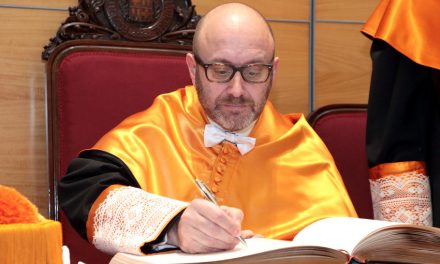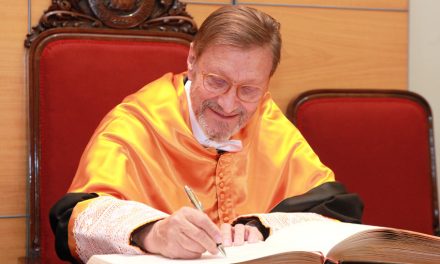


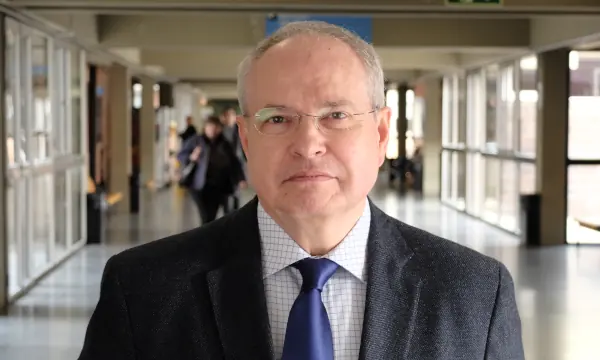
Dr. Agustín Moreno
Agustín Moreno Ruz, Professor at the Faculty of Economics and Business of the University of Barcelona and a regular collaborator of the Royal European Academy of Doctors (READ), has published in issue 92 of the specialized journal “Técnica Contable y Financiera” (January 2026) the article “Sustainability, Workforce, and the Company’s Internal Goodwill”, in which he argues that productivity and performance must serve as the objective basis for establishing fair wages, as their combination should enable the company to increase the value of its internal goodwill. In this same line of research, the expert recently published in previous issues of the journal the articles “Sustainability in Internal Goodwill: Costs in the Circular Economy,” focused on European sustainability reporting standards, and “Sustainability, Entropy, and Internal Goodwill,” emphasizing that sustainability should not represent a burden for companies but rather an opportunity to improve efficiency, profitability, and internal value.
In his latest work, the author analyzes the relationship between corporate sustainability, the workforce, and the company’s internal intangible value within the framework of European regulations on fair wages and social transparency. In this regard, he notes that the European Union is promoting a regulatory framework requiring Member States and companies to guarantee adequate minimum wages aimed at ensuring a decent standard of living, reducing in-work poverty, and fostering social cohesion. Such wages must be determined according to objective criteria, particularly productivity, economic development, and labor efficiency.
Moreno Ruz emphasizes that the workforce constitutes an essential element of a company’s internal value, as employees represent not merely an accounting cost but an investment whose return materializes in the form of productivity, innovation, and competitiveness. For this reason, remuneration should evolve upward and variably according to the employee’s objective contribution, beyond the statutory minimum wage.
 The academic further points out that European corporate sustainability legislation requires companies to report on key aspects of personnel management, such as training, skills development, periodic performance evaluation, and the existence of adequate wages. These assessments must be based on criteria known to the employee and carried out at least once a year, enabling the measurement of workforce quality and effectiveness. According to Moreno Ruz, business growth depends on qualified, motivated workers who are well integrated into teams, as well as on efficient organizational systems capable of leveraging their capabilities. Continuous training, proper recruitment, and recognition of employee value strengthen the company’s internal goodwill, understood as the set of intangible assets that enhance its value and competitiveness.
He concludes that a corporate policy centered on fair wages, professional development, and efficient talent management not only improves working conditions but also generates wealth, strengthens employment, and increases the sustainable value of the company.
Moreno Ruz is an academic authority in the study of the accounting value of internal goodwill, addressing both market and investor requirements and the proper functioning of companies. He holds a PhD in Economic Sciences, Advanced Accounting, and Auditing from the King Juan Carlos I University, and advocates adapting accounting frameworks to market demands while broadening the scope of research to examine corporate management from every perspective in order to identify needs and provide appropriate accounting responses.