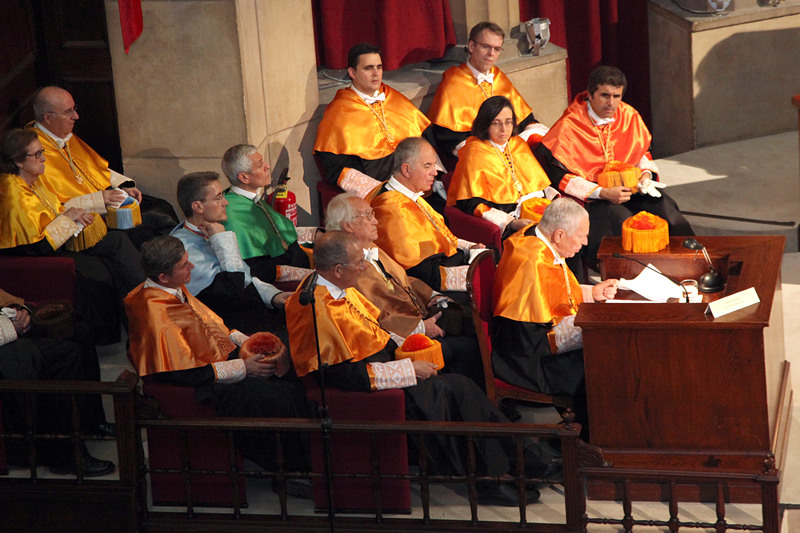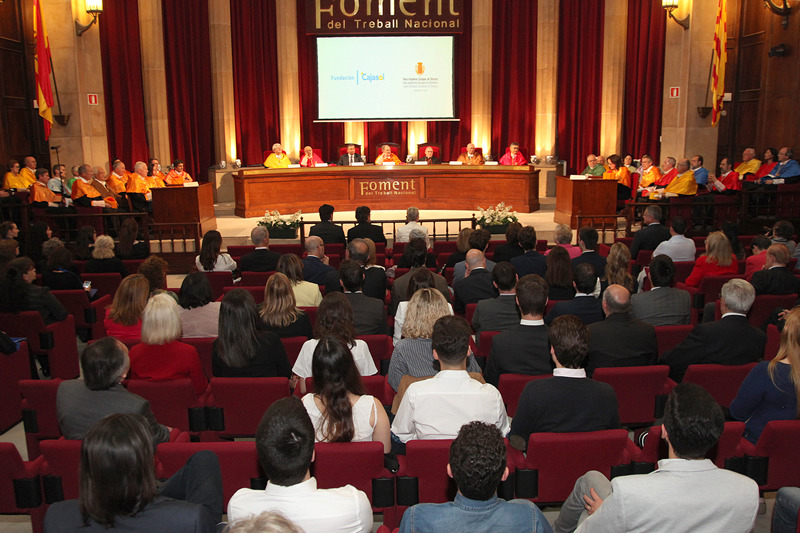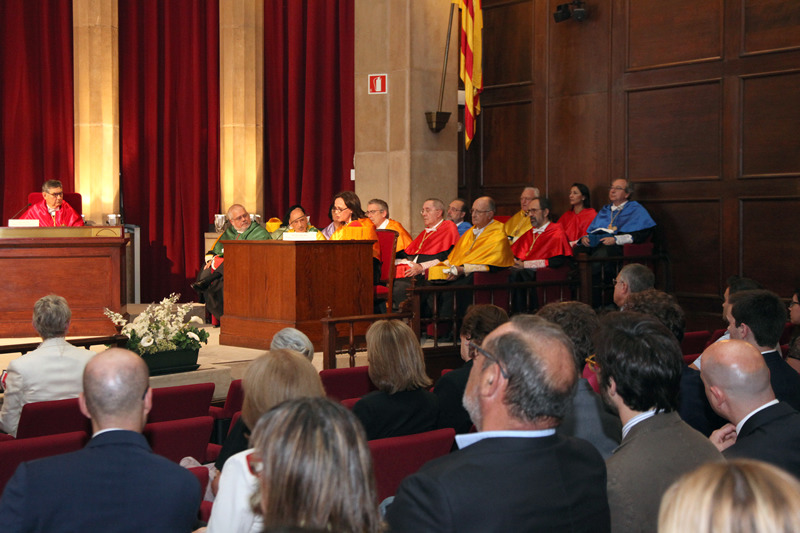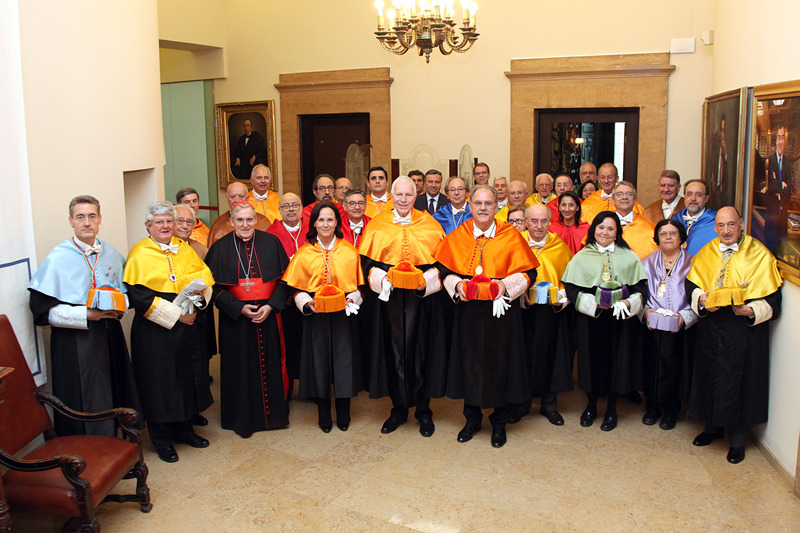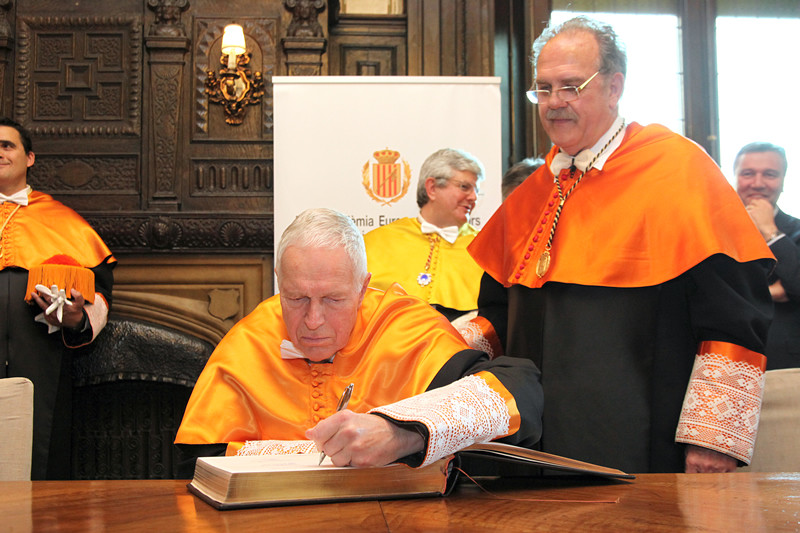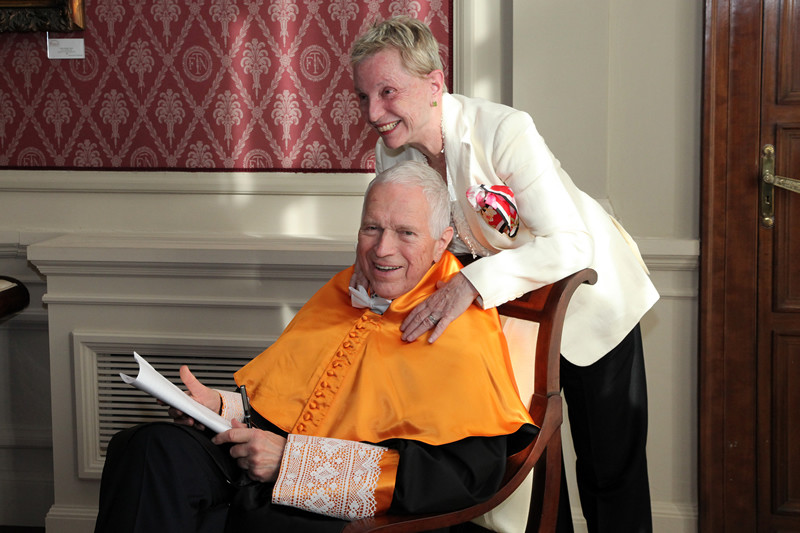


Honorary Academician
Social Sciences: Doctor of Economics
Date of admission: May 19, 2017
Reply speech: Hon. Dr. María José Esteban Ferrer, Doctor in Economic Sciences
Nobel Prize in Economics 2006: He was awarded the Nobel Prize for the theory of endogenous growth and developed key concepts such as the Phillips curve, which links inflation and unemployment.
EDMUND PHELPS
- Born in 1933 in Chicago, raised in Hastings-on-Hudson, N.Y.
- Nobel Prize in Economics (2006).
UNIVERSITY EDUCATION
- Bachelor of Arts (B.A.) from Amherst College (1955).
- Ph.D. in Economics from Yale University (1959).
TEACHING AND PROFESSIONAL ACTIVITY
- Researcher at the RAND Corporation.
- Academic positions at Yale University and the Cowles Foundation (1960–1966).
- Professor at the University of Pennsylvania.
- Since 1971, Professor at Columbia University.
- Director of the Center on Capitalism and Society at Columbia University.
- Extensive publications on economic growth, unemployment theory, recessions, stagnation, social inclusion, meaningful work, dynamism, and endogenous innovation.
- His goal: to place “people as we know them” at the centre of economic theory.
- In the late 1960s and early 1980s, through Microeconomic Foundations of Employment and Inflation Theory (1970), he demonstrated that workers, customers, and firms make decisions with incomplete information, forming expectations to compensate for uncertainty.
- In this framework, he studied wage setting, mark-up rules, and the slow pace of economic recoveries.
- Between the mid-1980s and late 1990s, he developed a structuralist macroeconomics focused on explaining the effects of structural forces on employment.
- In Structural Slumps (1994) and works with Hian Teck Hoon and Gylfi Zoega, he showed how natural employment declines due to wealth accumulation, foreign interest rates, and monetary weakness.
- In Rewarding Work (1997), he argued that what matters most are not material earnings but the non-material rewards of work: engaging in projects, achieving goals, and experiencing prosperity through personal development.
- In Mass Flourishing (2013), he maintained that human creativity has existed since prehistoric times, but a culture that liberates and inspires dynamism is needed to ignite the “passion for the new”.
Summary video
Complete video