

Alberto Maestre Fuentes is admitted as a Numerary Member of the RAED
His Excellency Dr Alberto Maestre Fuentes, Doctor of History, is admitted as a Numerary Member of the Royal European Academy of Doctors, with the address “Unfinished Decolonization: Portuguese Timor and the Interruption of Independence (1950-1975)”.
Response by: His Excellency Dr Pablo-Ignacio de Dalmases y de Olabarría, Doctor of History
Assembly Hall (A) at the headquarters of Foment del Treball. Via Laietana, 32, Barcelona
Tuesday, 3 November 2026
18:30 h
Format: In person and via streaming
Registration: Please confirm attendance with the Secretariat: secretaria@raed.academy or by calling tel. 93 667 40 54
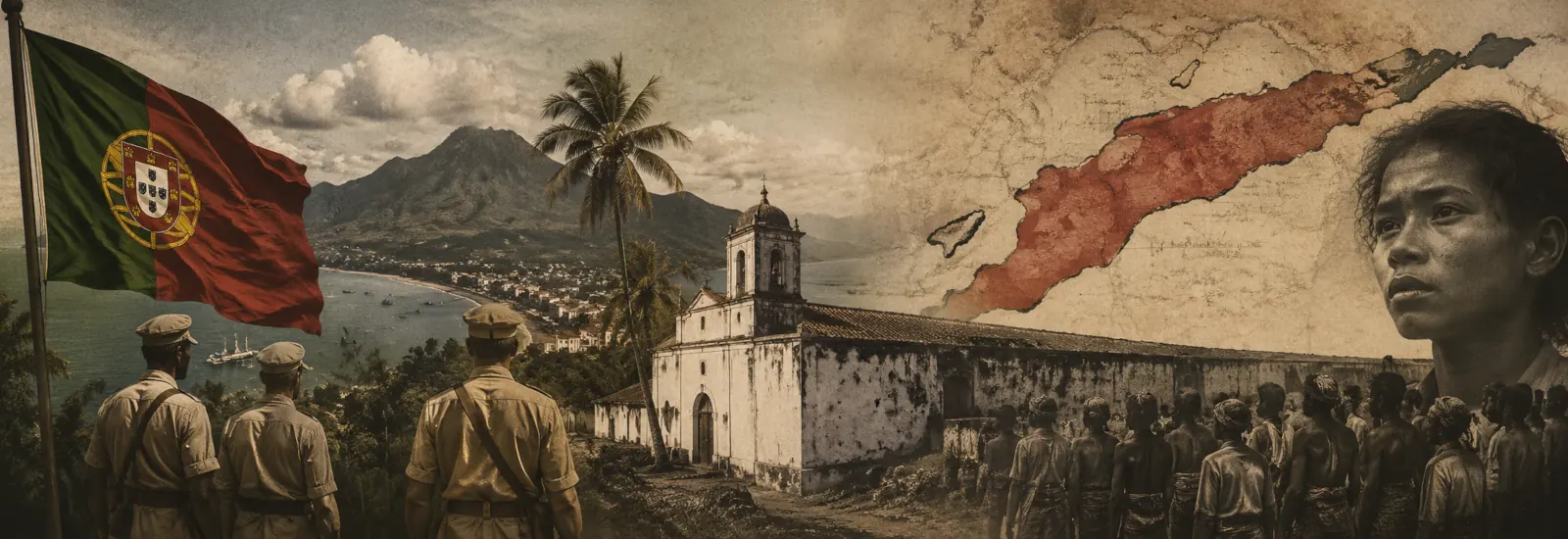
Unfinished Decolonization: Portuguese Timor and the Interruption of Independence (1950-1975)
The analysis of the historical evolution of East Timor requires starting with an approach to the precolonial period and to the process through which the Portuguese presence was established in the territory. The arrival of the Portuguese and the subsequent consolidation of their political and administrative authority are fundamental elements for understanding the historical, social and political configuration of the current Timorese State.

Dr Alberto Maestre
Likewise, it is essential to examine the impact of the Second World War on the territory. The military operations carried out after the intervention of the Allied forces and the subsequent Japanese occupation had profound consequences for the local population and significantly altered the political and economic dynamics of the colony. Subsequently, especially from the 1950s onwards, the Portuguese administration, within the context of the Estado Novo, intensified its mechanisms of political and administrative control, while also promoting policies aimed at strengthening the territory’s integration into the Portuguese colonial structure.
The transformation of Portuguese Timor into an overseas province took place in an international context marked by the expansion of the principles of self-determination and decolonization promoted by the United Nations after the Second World War. This new international reality generated growing tensions between Portuguese colonial policy and the emerging demands for political emancipation.
In this context, the development of Timorese nationalism, together with the profound political changes that took place in Portugal after the Carnation Revolution of 1974 and the fall of the authoritarian regime, opened up a new scenario for the resolution of the colonial question. The beginning of the decolonization process placed the self-determination of the territory as a priority objective of the Portuguese administration. However, this process was conditioned both by the divisions among the main Timorese political forces and by Indonesia’s growing intervention in the internal affairs of the territory.
The escalation of political and military tensions culminated in the unilateral proclamation of East Timor’s independence on 28 November 1975. However, this situation was short-lived, as on 7 December 1975 Indonesia launched a large-scale invasion that led to the occupation and subsequent annexation of the territory.
The Indonesian occupation lasted for more than two decades and was marked by intense political and armed resistance, as well as by the growing involvement of the international community in the search for a solution to the conflict. Finally, after the self-determination referendum held in 1999 and the subsequent transition process sponsored by the United Nations, East Timor fully achieved independence on 20 May 2002, thus culminating a prolonged process of decolonization and state-building.
Follow the event live
You will be able to follow the event live from this same page.
Organized by:

With the collaboration of: