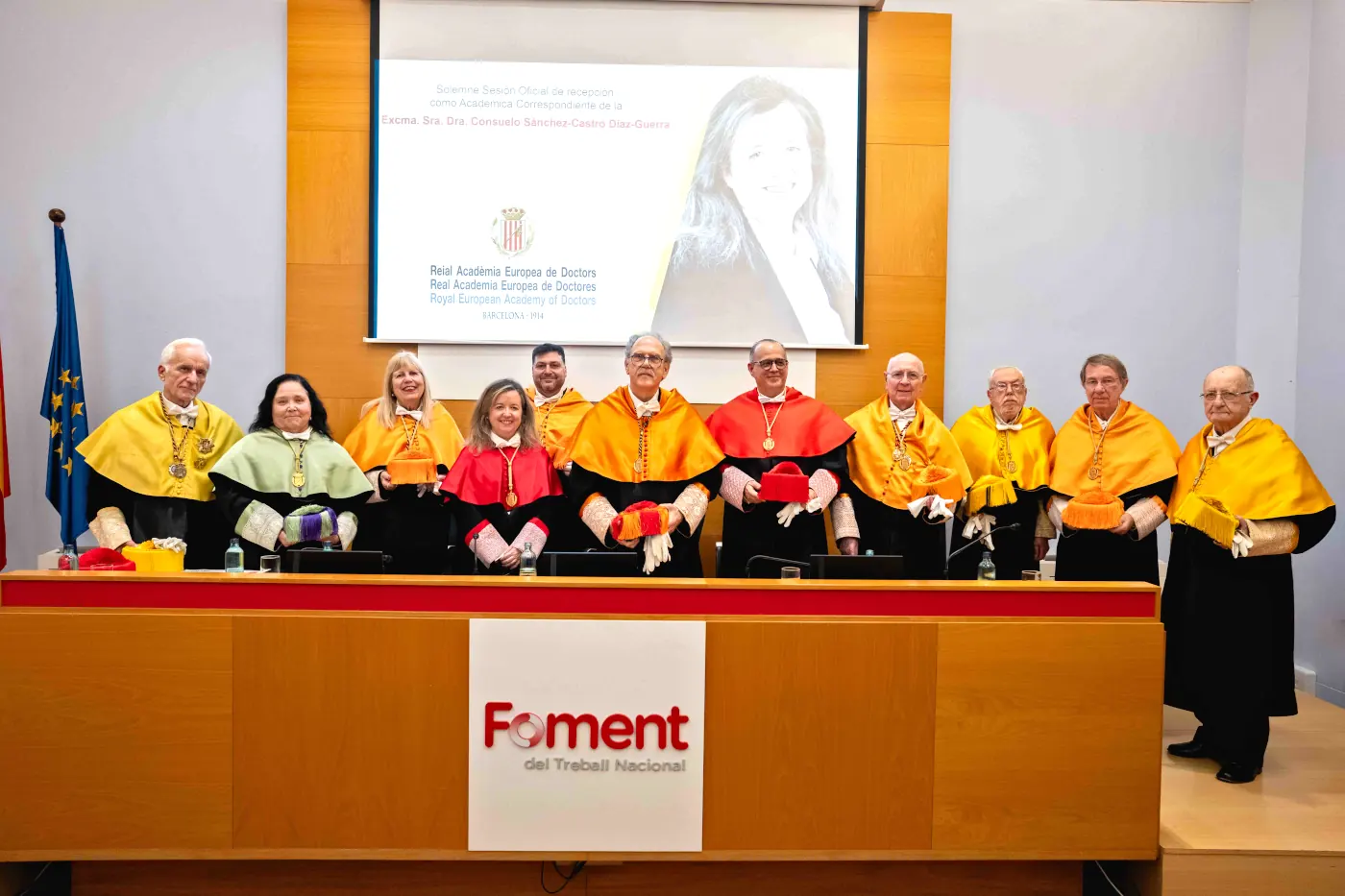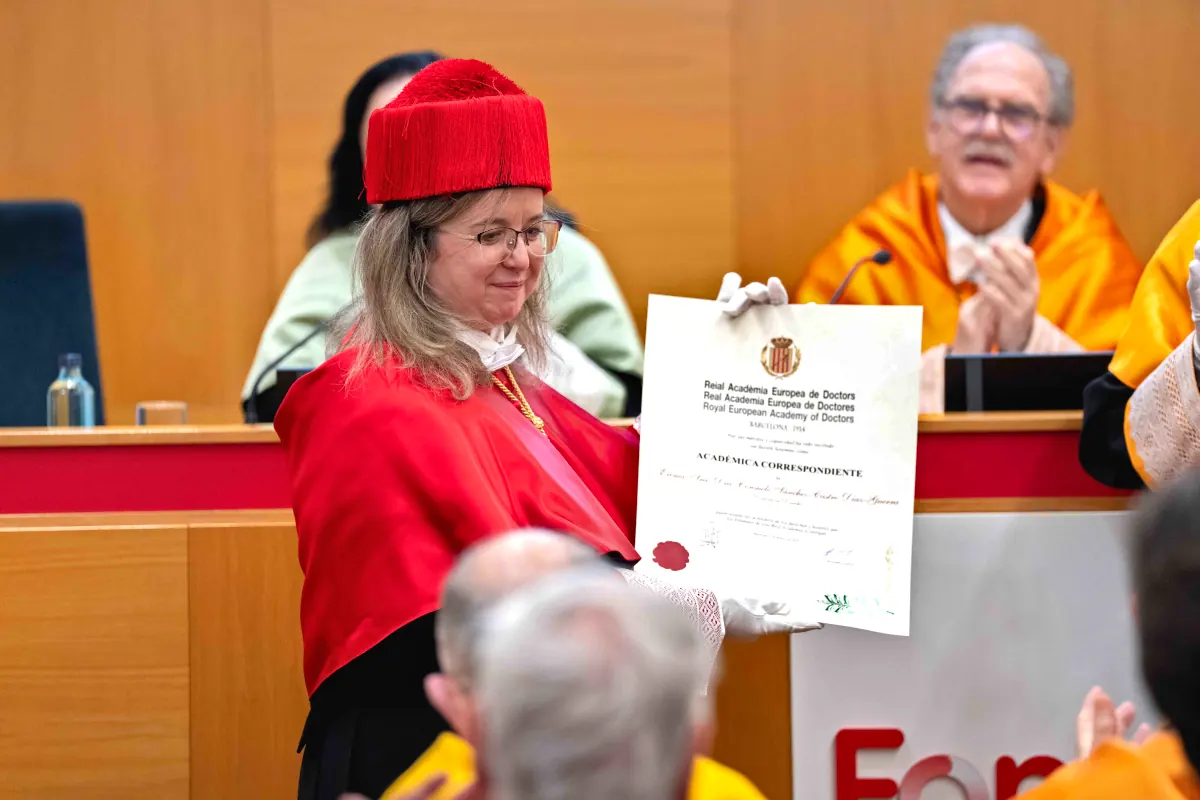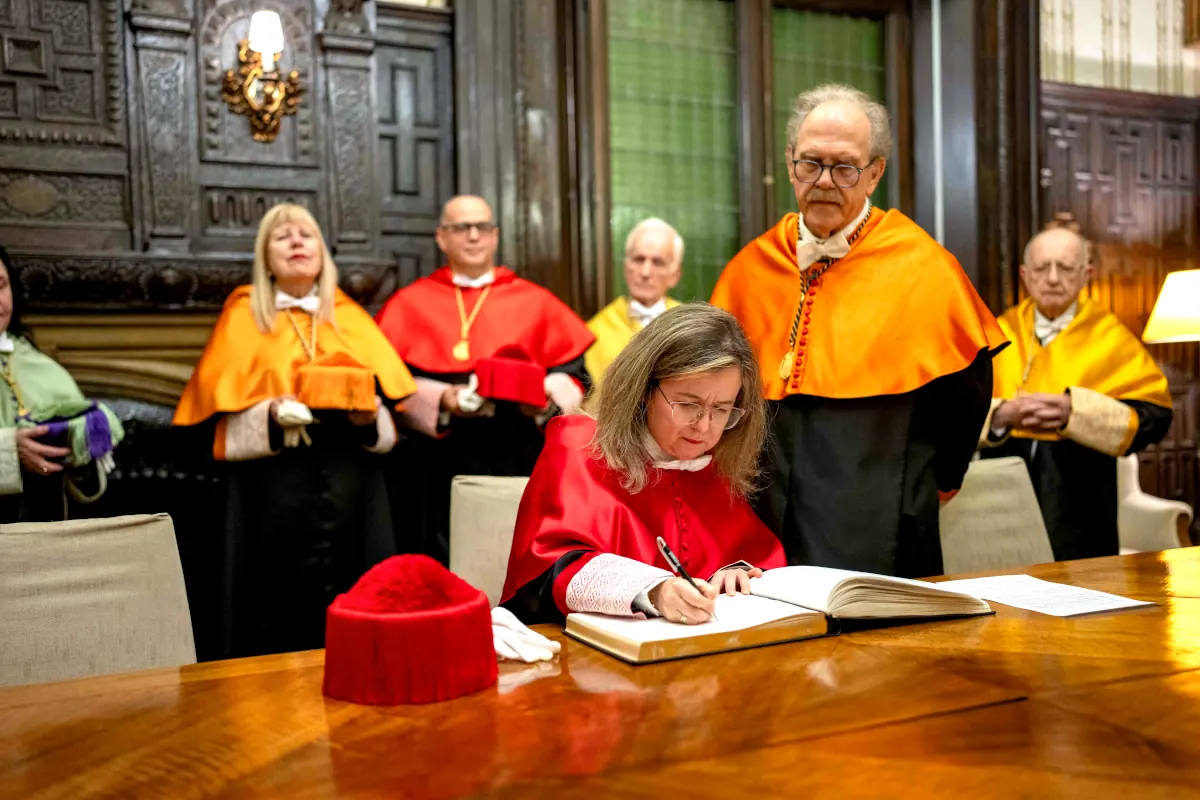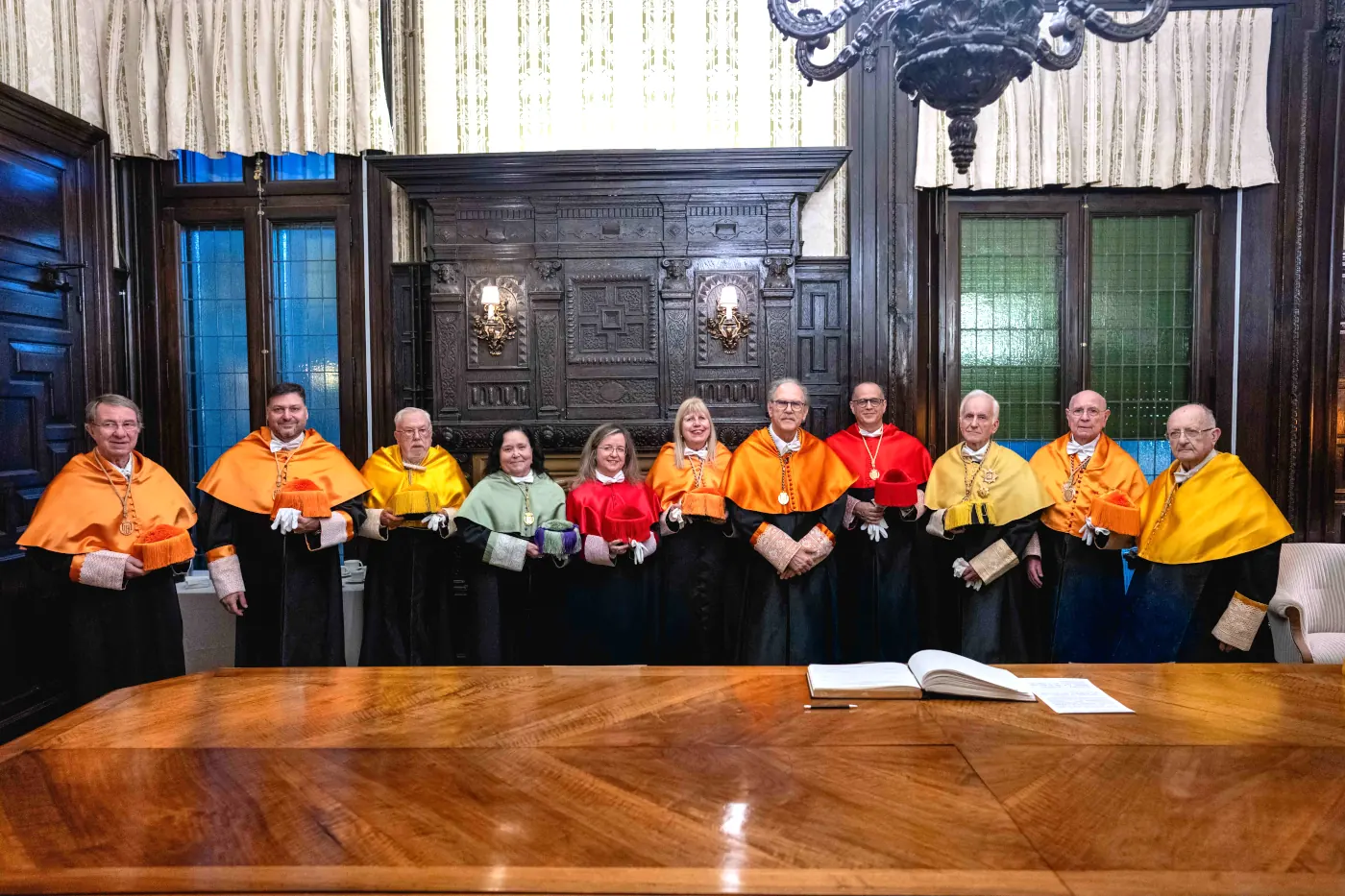


Consuelo Sánchez-Castro, PhD in Law, was inducted as a Corresponding Member of the Royal European Academy of Doctors (READ) during a solemn ceremony held on February 4 at Fomento del Trabajo, the Academy’s headquarters. The new academic delivered her inaugural address “Law of Robotics and Drones”, in which she explained how the expansion of robotics, artificial intelligence, and drones has outpaced traditional legal frameworks, forcing a rethinking of concepts such as civil liability, privacy, and employment protection—without recognizing legal personality for machines. She was formally welcomed on behalf of the Academy by Full Member Jaume Antich.

Dra. Consuelo Sánchez-Castro
The new academic examined the main legal challenges posed by these emerging technological elements that are increasingly shaping society, proposing the strengthening of the legal framework for human responsibility rather than granting legal personality to machines, given the current ambiguity surrounding liability for software failures and the inadequacy of mandatory insurance to cover risks such as violations of privacy. “Technology, which for centuries was considered a merely inert tool, has now acquired unprecedented autonomy, raising ethical and legal dilemmas that demand an urgent reassessment of fundamental concepts such as legal personality, responsibility, and privacy,” she stated at the outset of her address.
Sánchez-Castro also succinctly reviewed European and Spanish regulations on drones, data collection, and algorithmic transparency, drawing on recent rulings of the Supreme Court that reinforce the protection of fundamental rights and the requirement for oversight of public algorithms. In this context, she proposed the development of a future Law on Technological Responsibility and Transparency that would establish strict liability throughout the technological chain, expand mandatory insurance coverage for digital risks, and guarantee transparency and workforce transition in the era of digital autonomy.
“The age of automation demands a new legal paradigm that redefines obligations and guarantees the safety and well-being of citizens in an increasingly technological world. The solution does not lie in granting personality to machines, but in adapting our legal framework to assign responsibility, protect citizens, and ensure a fair labor transition. We cannot allow technological progress to outpace our capacity to regulate it. Law must anticipate, not react. It is our collective responsibility to build a future in which technology and humanity coexist in an ethical, fair, and safe manner. The initial question of a drone’s liability is no longer an engineering problem—it is a problem of justice. And its solution lies in our hands,” the expert concluded.
A professor at the Society for Advanced International Studies and the University of Castilla-La Mancha, Sánchez-Castro is the author of more than fifty specialized books and over 120 articles. Her career as a researcher has been recognized with prestigious international awards in innovation and digital transformation. In professional practice, she brings more than 25 years of experience in the legal profession, with extensive expertise in areas such as Urban and Land Registry Law, Administrative Law, and Technology Law, as well as in commercial mediation and arbitration.
Full inaugural address: “Law of Robotics and Drones”