

Conference
25 Painters Look at Childhood: From Murillo to Picasso
Boardroom of the RAED headquarters. Via Laietana, 32, Barcelona
Wednesday, 17 December 2025
6:30 p.m.
Format: In-person
Registration: Please confirm attendance with the Secretariat: secretaria@raed.academy or at tel. 93 667 40 54
Speakers
- Conference delivered by Dr. Joaquín Callabed, Numerary Member of the RAED, Doctor of Medicine and Pediatrician.
- Presentation by Dr. José Mateo Ycardo, graduate in Medicine and Biology. Geneticist trained at the Karolinska Institute in Stockholm. Humanist writer on topics of History, Philosophy, Ethics and Music. He has published several books in the humanistic field that enrich his integral understanding of the human condition.
25 Painters Look at Childhood. From Murillo to Picasso
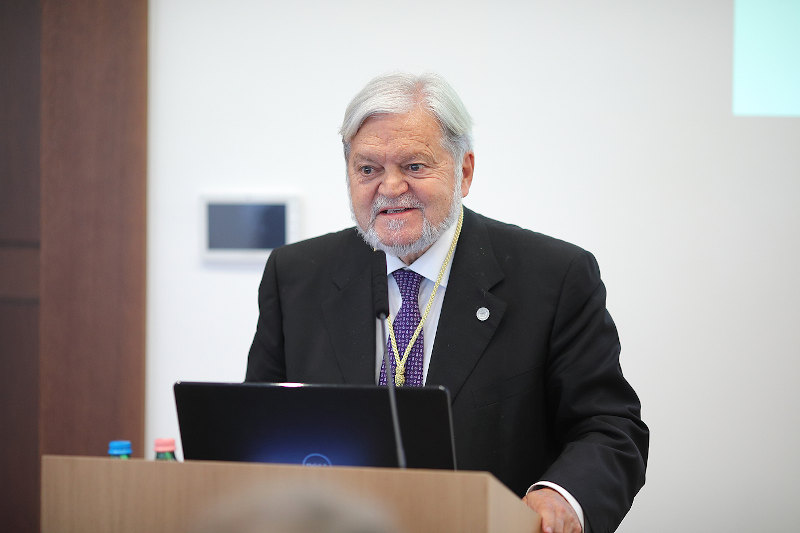
Dr. Joaquín Callabed
The conference “25 PINTORES MIRAN A LA INFANCIA (De Murillo a Picasso)” (25 PAINTERS LOOK AT CHILDHOOD. From Murillo to Picasso) presents works by Spanish and European painters from the 18th century onwards, who interpret childhood within its family and social environment through different artistic trends such as realism, romanticism, naturalism, impressionism and expressionism, moving away from the rigid settings of palaces or churches where children had been typically represented.
In the 18th century, the winds of the English, French and German Enlightenment —with figures such as Locke, Hume, Voltaire, Diderot, Rousseau and Pestalozzi— shaped a new historical context in which the child acquires rights and a new social status. The child becomes an unrepeatable subject-person deserving of individual and personalised treatment, and this global movement also permeated painting. Interest in education, health, play, and maternal and family bonds is strongly present in these works.
Descriptive framework
Recognised works by authors who approached childhood themes are presented, analysed from both medical and artistic perspectives.
Murillo contributes his painting “The old woman delousing a child and a puppy”, in Baroque style. A pioneer in Spanish painting depicting children enjoying freedom.
- Goya, with his work “El garrotillo” or “Lazarillo de Tormes”, uses a free romantic style to portray the drama of a father attempting to remove diphtheritic membranes from his child’s throat.
- Fildes, in his work “The Doctor”, offers dramatic Victorian social realism.
- Knaus, with German critical realism, presents the scene “In the kindergarten”.
- Verhas, a Belgian realist painter, presents an exquisite painting “The Little Painter”.
- Albert Anker, Swiss realist painter, presents “The Little Brother”.
- Bouguereau, with French academic style, contributes “Love for Childhood”.
- Among the naturalist painters, Millet stands out with his painting “The First Steps”, reflecting his love of the countryside and childhood.
- Bastien-Lepage, in “Little Shepherd”, portrays the widespread child labour of the time.
- Virginie Demont Breton, with her “Children on the Beach”.
- Bouland, realist painter, contributes “Parents’ Love”.
- Jean Jules Geoffroy presents his major work “The Milk Drop in Belleville by Dr. Variot”, which explains the historical origin of this essential maternal-infant health institution created by Léon Dufour in Fécamp (Normandy) and disseminated worldwide by Gaston Variot in 1906 during an international congress in Paris.
- Impressionism is represented by Berthe Morisot with her work “The Cradle”.
- Mary Cassat with “The Child’s Bath”.
- Anna Ancher, with “Child Vaccination”.
- Northern naturalist realism appears in Edelfelt, “Children on the Beach”.
- Larsson and his exquisite “Motherhood”.
- The Norwegian expressionist Edvard Munch with his painting “The Sick Child”.
- The conference concludes with two Spanish painters: Joaquín Sorolla, with “Leaving the Bath”, filled with Mediterranean light depicting a delicate and familiar childhood scene.
- Pablo Picasso closes the conference with his “Pink Motherhood”.
Organised by:

With the collaboration of: