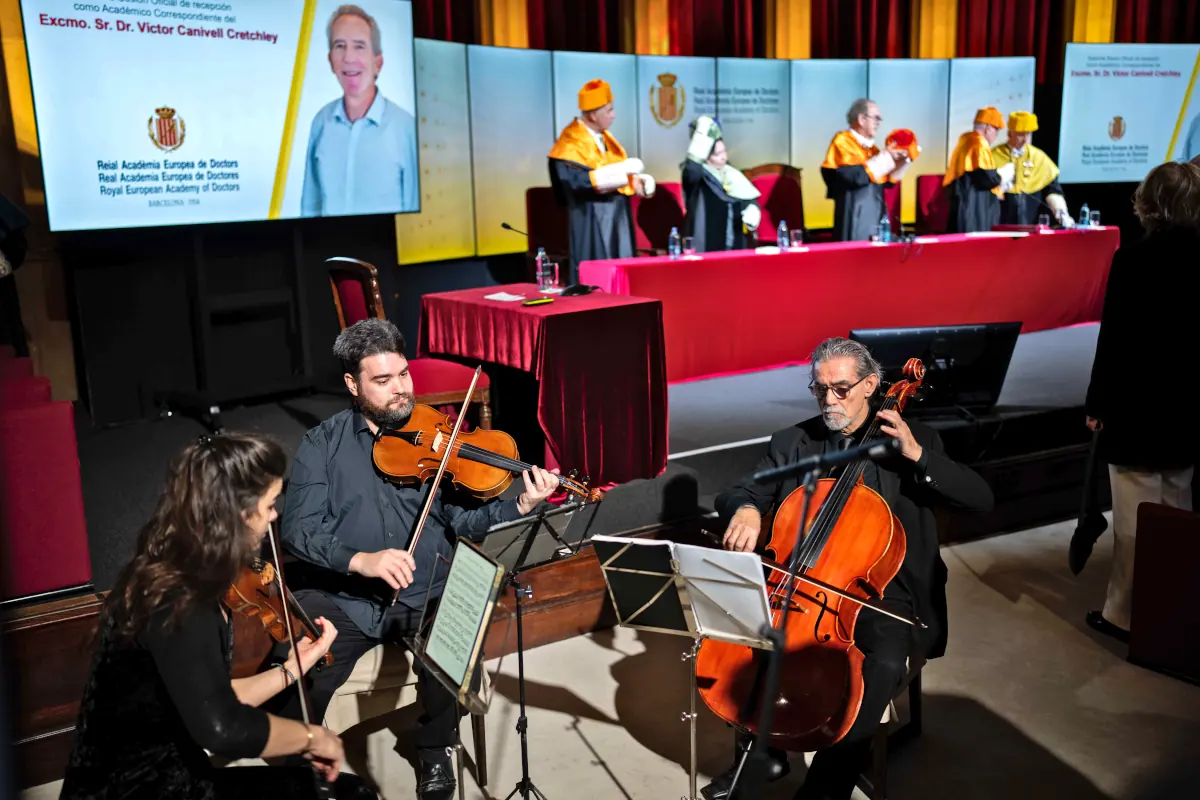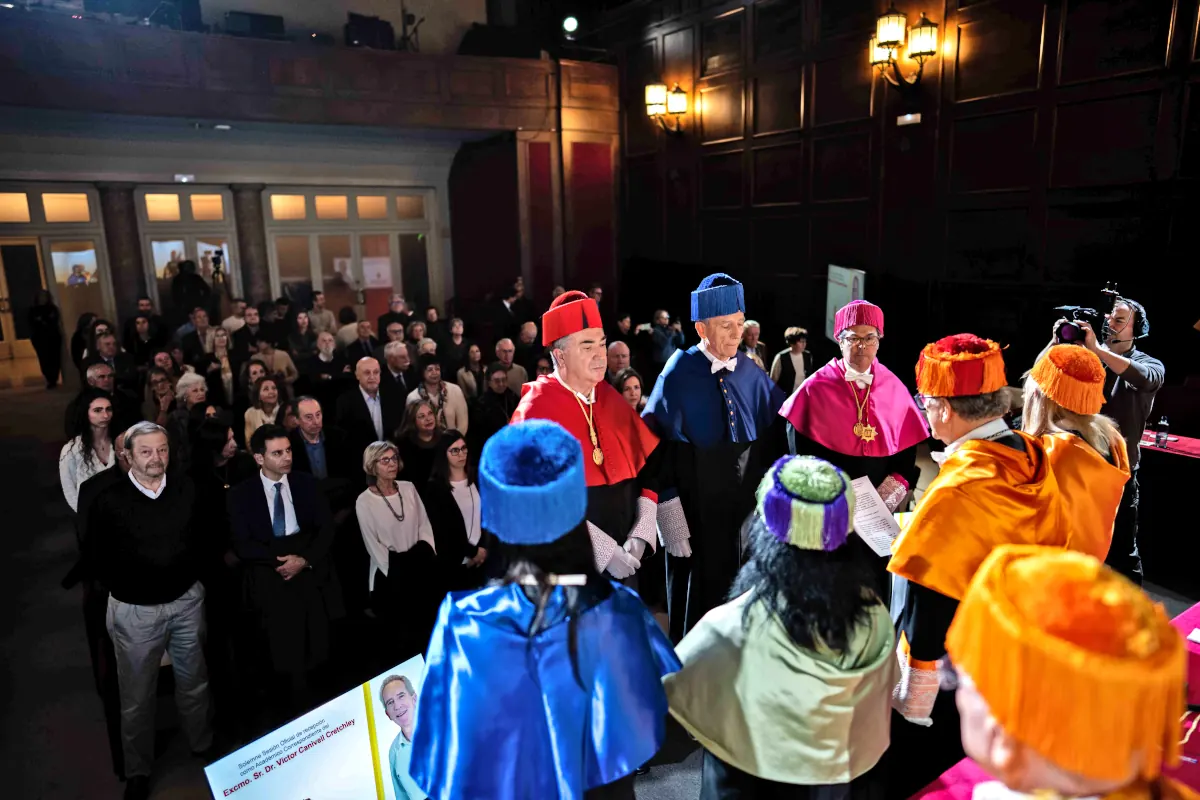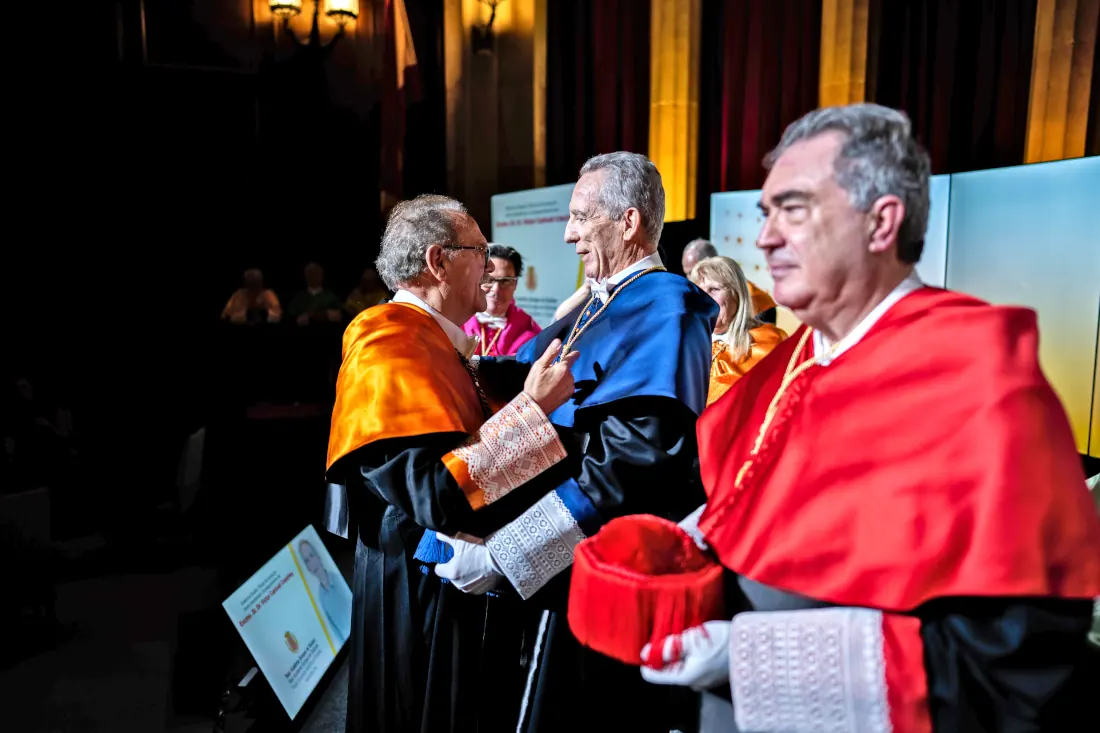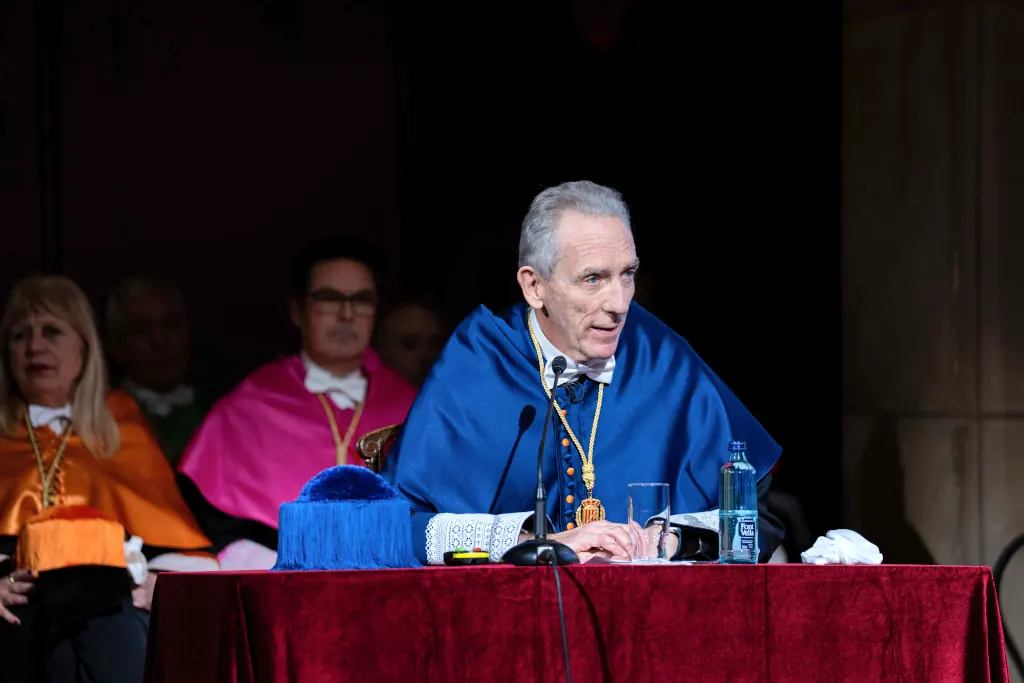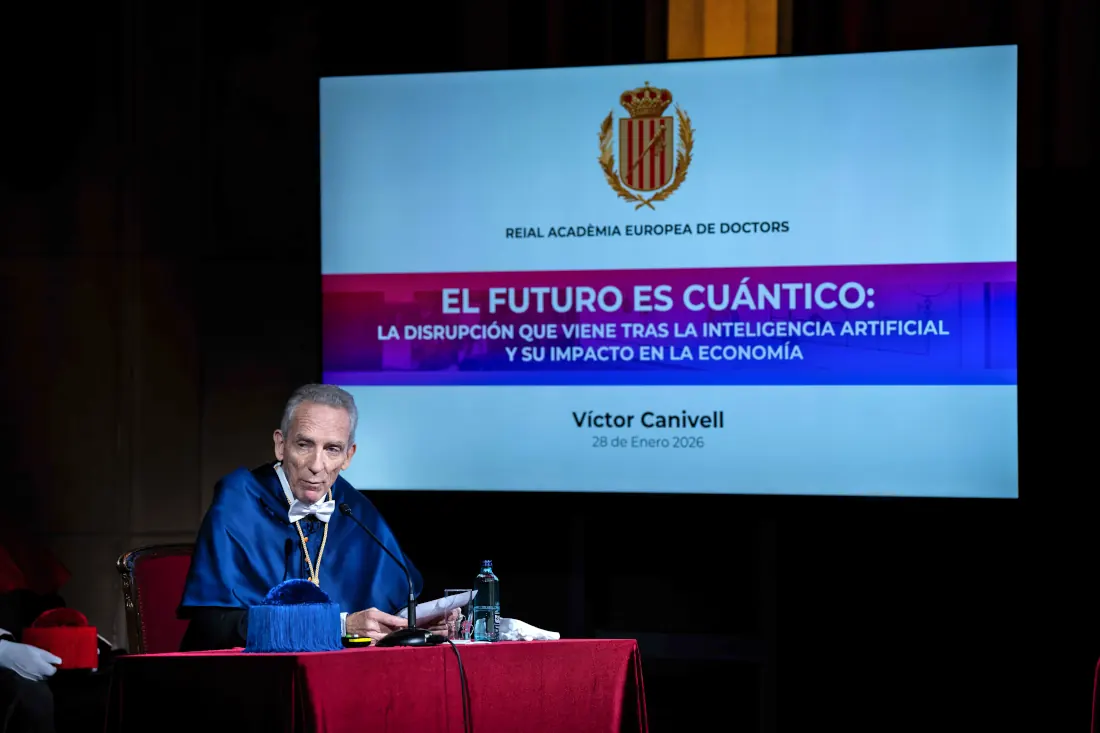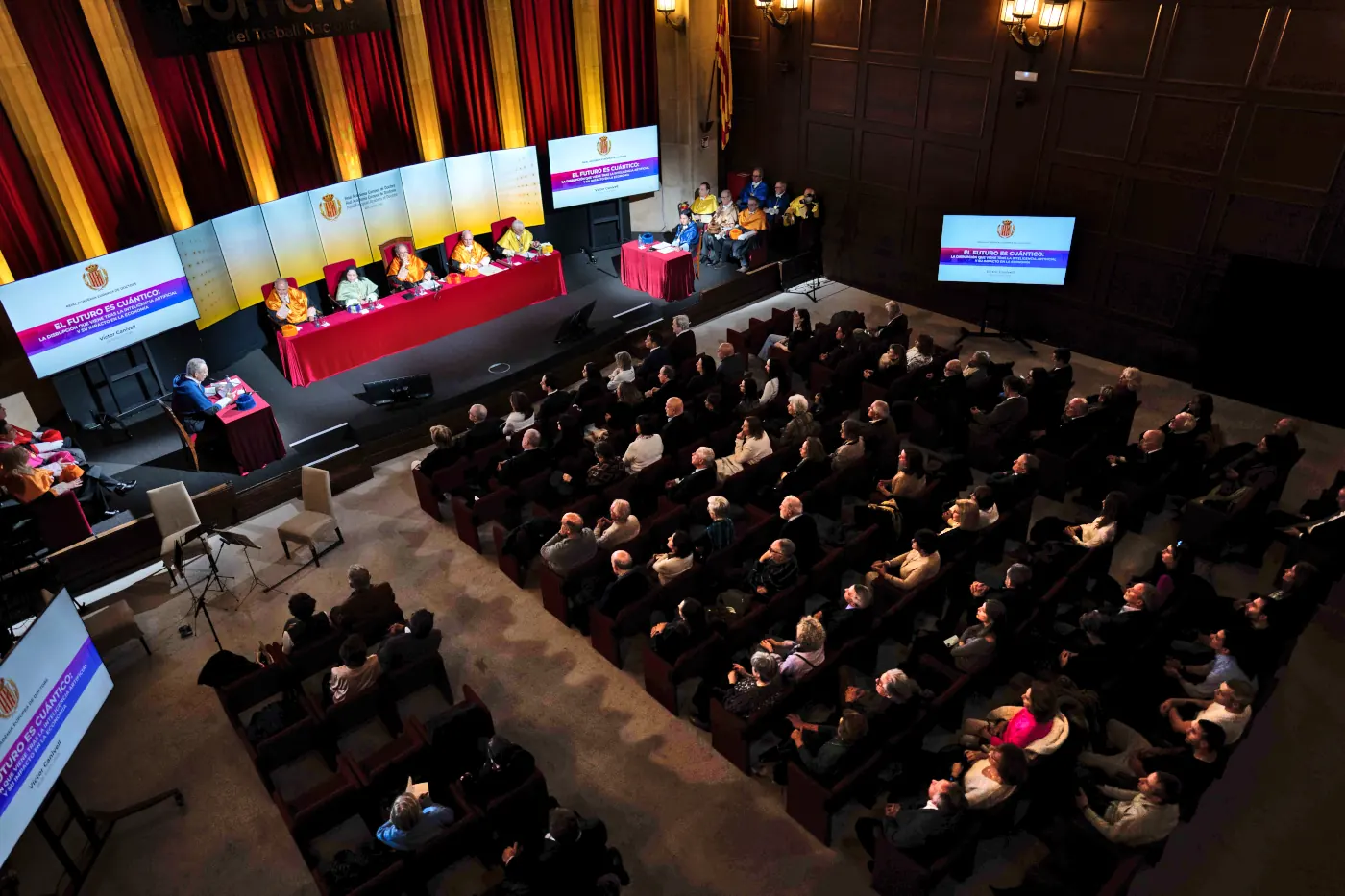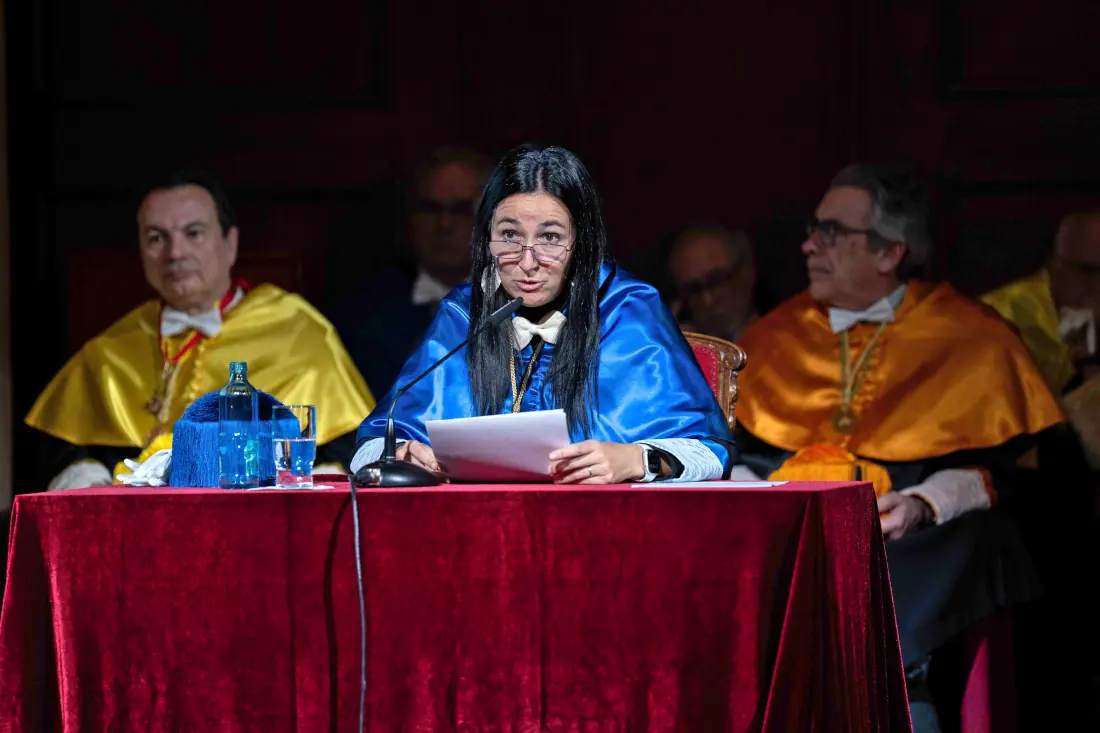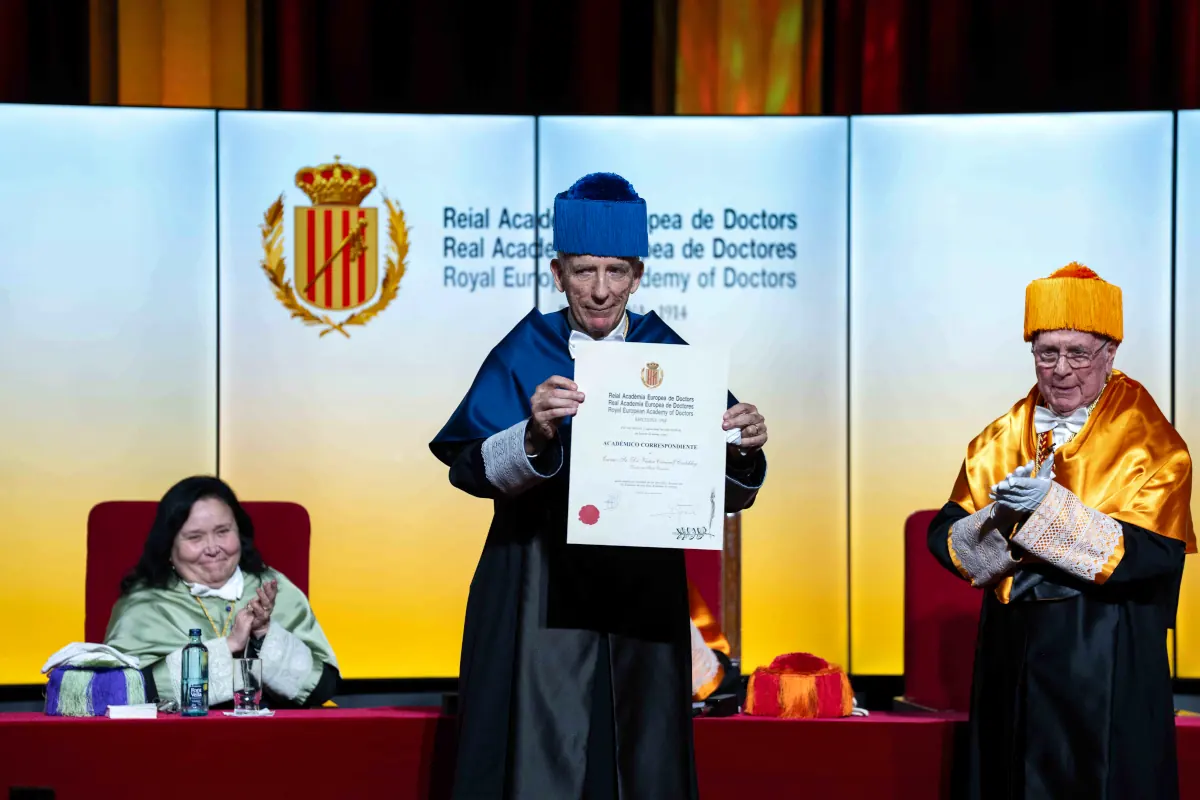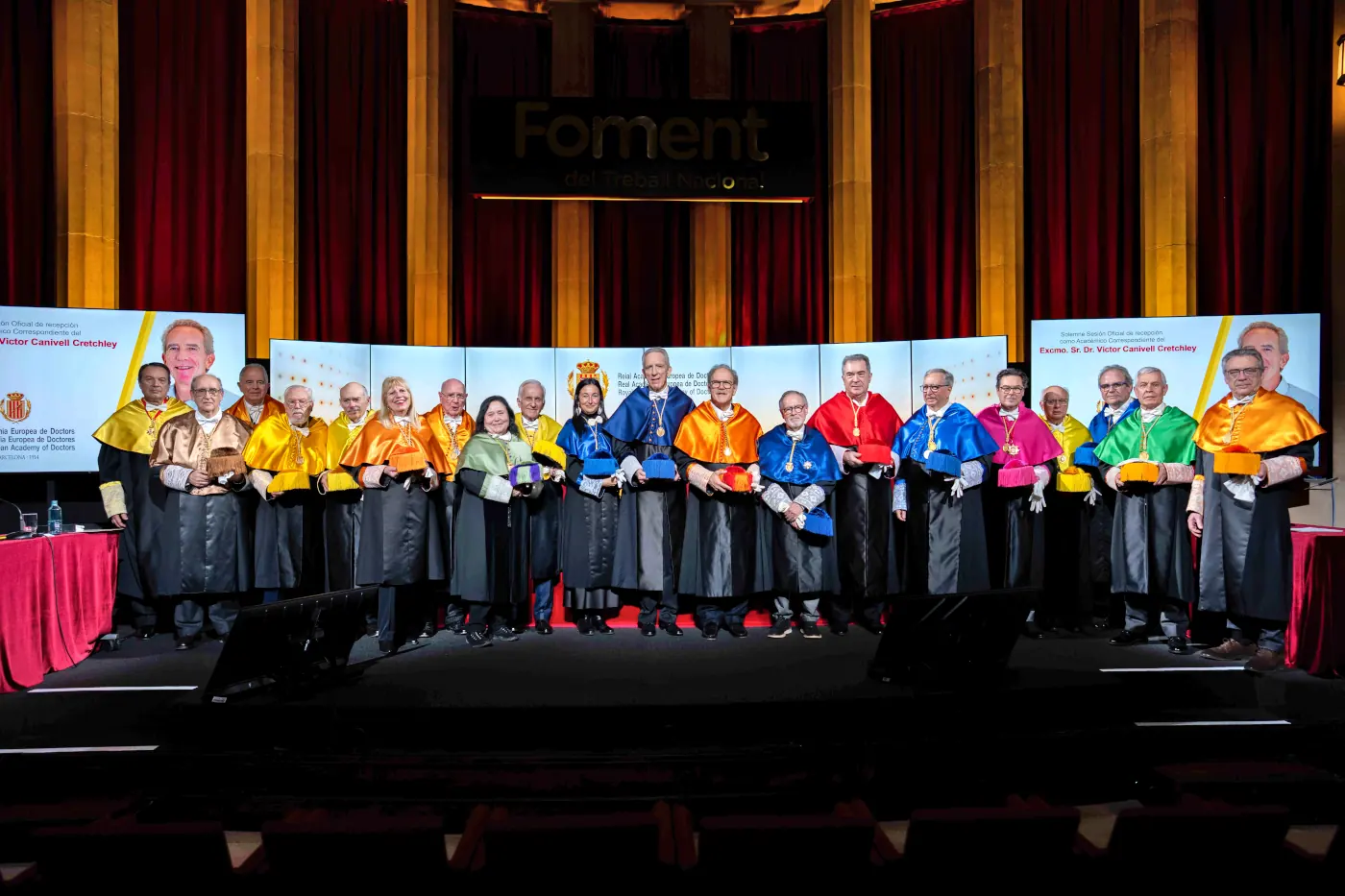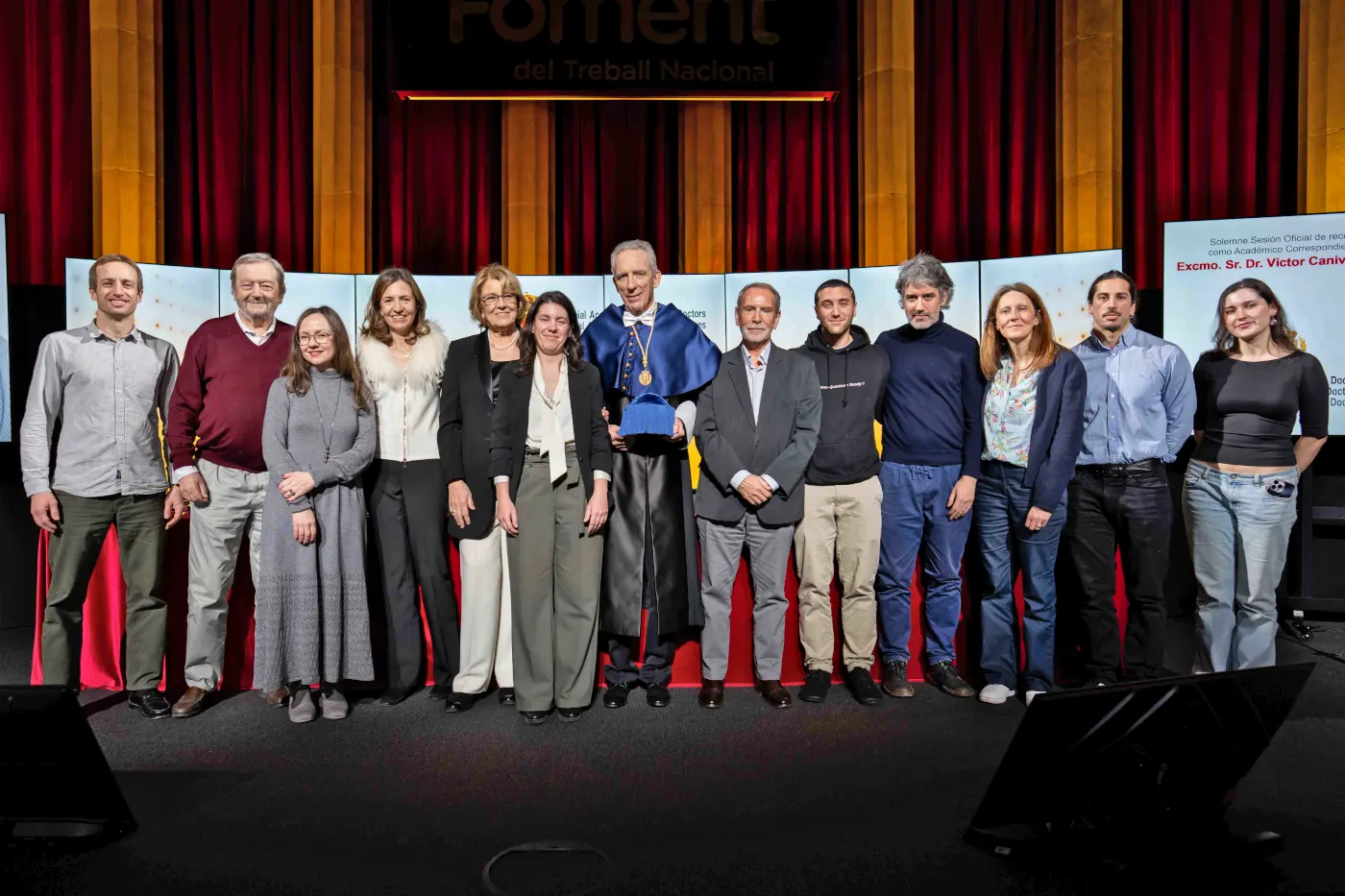



Victor Canivell, PhD in Quantum Physics, was inducted as a Corresponding Member of the Royal European Academy of Doctors (READ) during a solemn ceremony held on January 28 at Fomento del Trabajo, the Academy’s headquarters. The new academic delivered his inaugural address entitled “The Future Is Quantum: The Disruption Coming After AI and Its Impact on the Economy”, in which he argues that the world is already “quantum,” from semiconductors to magnetic resonance imaging, but that the true revolution is yet to come with quantum computing—a technology capable of exponentially increasing computing power and drastically reducing the energy consumption of data centers. He was formally welcomed on behalf of the Academy by Full Member and renowned science communicator Sònia Fernández-Vidal.
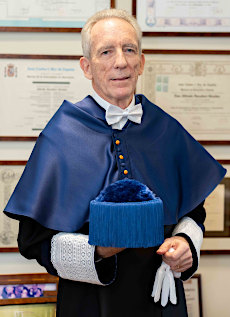
Dr. Victor Canivell
The expert explained that, at the dawn of the development of this new and potentially disruptive technology, the first systems are already operating in supercomputing centers and are pointing toward high-value applications in optimization, chemistry, materials science, finance, and cybersecurity. At this point, he warned that one of the most sensitive effects of this transition is that future quantum computers will be able to break current encryption systems, a factor that has turned quantum technology into a geopolitical priority. This is compounded by growing economic interest, reflected in the sharp rise in stock-market valuations of companies in the sector and in investments by major technology firms and public administrations.
Canivell also warned of Europe’s delay—and Spain’s along with it—in the creation of major leading companies in this field, although he stressed that there is still room to reverse this situation with the necessary investment. In this regard, he highlighted the role of Barcelona as an emerging hub, with the installation of Spain’s first quantum computers and a growing ecosystem of startups and scientific institutions. For the new academic, quantum computing will not replace classical computing, but will complement it through hybrid systems. Its full deployment is expected within a timeframe of between five and fifteen years—a window that, according to the author, should be used to prepare companies, governments, and research centers. In any case, he anticipated that this quantum revolution will surpass the one already being driven by artificial intelligence.
“No one could have imagined at the dawn of computing that we would end up with inexpensive, highly integrated chips to build extremely powerful computers; that the internet would be invented; that Google and social networks would emerge; along with mobile phones and many other services—so that today the young ICT industry would form the backbone of the entire economy and, consequently, of society. Today, the ICT sector is entering a prodigious decade with quantum computing and artificial intelligence. What we all agree on is that quantum computing and AI are going to accelerate the world. Let us hope it is for the better. The best is yet to be invented!” the new academic concluded.
The new academic has devoted his professional career to senior management positions in the information technology and telecommunications sector. After more than twenty years in executive roles at U.S. multinationals such as Hewlett-Packard, Silicon Graphics, 3Com, and Perkin-Elmer, he returned to Spain to lead several startups in cybersecurity and bioinformatics. He is the founder and president of the Spanish quantum computing startup Qilimanjaro Quantum Tech, one of the European leaders in the field. He is a member of the Real Sociedad Española de Física and the American Physical Society. Among other distinctions, he has received the 2024 Entrepreneur of the Year Award from the Associació Catalana d’Enginyeria de Telecomunicació i Tecnologies Digitals.
Inaugural Address: “The Future Is Quantum: The Disruption Coming After AI and Its Impact on the Economy”