

Dr. Pedro Guillén
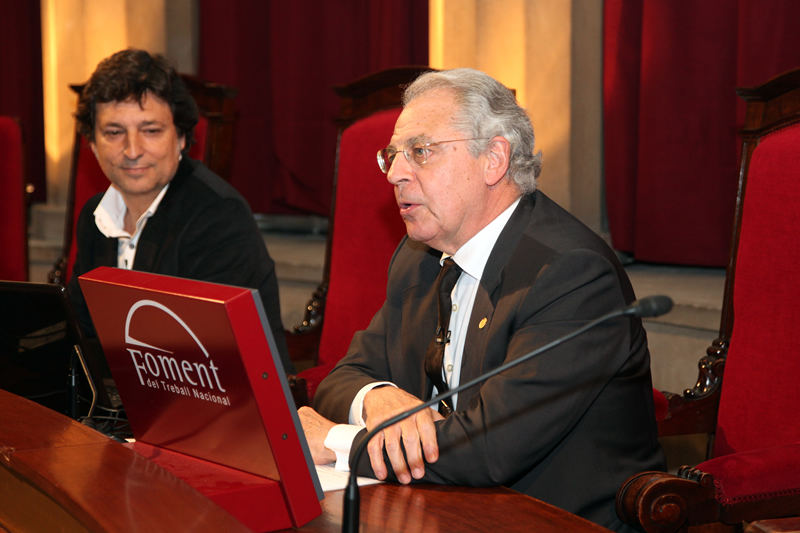
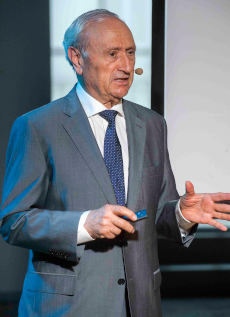
Pedro Guillén, founder and president of Clínica Cemtro, president of the Doctor Pedro Guillén Foundation, Extraordinary Professor and Honorary Dean of the Catholic University of Murcia, and Honorary Member of the Royal European Academy oF Doctors (READ), presented last December—through the communication channels of the Real Academia Nacional de Medicina de España, of which he is a Full Member—the study with which he was inducted into the READ last year: “Genuphony: the ‘language of the knee’”. In this work, Guillén underscores the importance of traumatologists listening above all to the testimony and the sounds or noises produced by their patients’ knees. The study addresses the embryology and development of joints, the anatomy of the knee, how the joint functions at rest, after exertion and following trauma, the synovial environment, “chondropenia,” the neural pattern of the knee, its specific characteristics and the most frequent injuries, as well as what the expert himself calls “genuphony”—the knee’s own language.
“I have great affection for the knee, and that is why I have been studying it for more than 50 years, with the sole aim of understanding it better and recognizing its signs and complaints. I wanted to know how it behaved after intense exertion without injury, after trauma, after extracting synovial fluid, and after rest. We performed arthrocentesis on the patient’s healthy knee and thus compared the data. The combination of the signs reported by the patient and those we obtain through examination—signs that the knee keeps ‘asleep’—constitute the ‘voices of the knee.’ Because the ‘voice’ expressed by a knee after a pivoting movement on a single supporting leg, with early severe effusion, loss of the final degrees of extension and blood inside the joint, is not the same as the ‘voice’ of the same knee after the same movement but with only clear synovial fluid. In the first case, unless proven otherwise, the knee has suffered an anterior cruciate ligament tear; in the second, it is a synovitis without rupture of capsuloligamentous or bony structures that would produce hemarthrosis,” explains the academic.
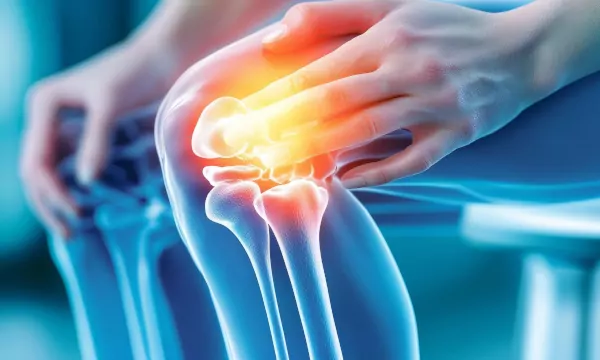 In his study, Guillén also addresses the most common knee injuries, particularly in the sports context, highlighting the importance of partial meniscectomy and meniscal repair rather than total removal, and emphasizing the relevance of a detailed medical history for the diagnosis of meniscal injuries. He also stresses the role of articular cartilage, its innervation, and “chondropenia,” the term he uses to refer to cartilage deficiency. In the evaluation and diagnosis of meniscal injuries, the expert highlights the importance of anamnesis and clinical examination, and describes some of the main symptoms and mechanical signs that help identify specific pathologies before deciding on treatment options, including arthroscopic surgery, especially in athletes.
A pioneer of arthroscopy in Spain, Guillén is also a member of the Academia Nacional de Cirugía de España, the Real Academia Nacional de Farmacia, the European College of Sports Traumatology, and the Spanish Committee of Sports Medicine, as well as an Honorary Member of the Arthroscopy Association of North America. He has received some of Spain’s highest civil distinctions, including the Medal for Merit in Work, the Grand Cross of the Order of Dos de Mayo, and the Medal of Honor for the Promotion of Invention, among other top-level awards. In the academic and research fields, he promotes the Pedro Guillén Chair of Regenerative Medicine.