



Nuria Montserrat, Minister of Research and Universities in the new Government of Catalonia, researcher at the Catalan Institution for Research and Advanced Studies (ICREA) and the Institute for Bioengineering of Catalonia (IBEC), and Numerary Member of the Royal European Academy of Doctors (RAED), announced in an interview published on October 19 in El País that the regional government will assume full management of university scholarships over the coming year—a responsibility that until now has been shared with the central government. The measure aims to simplify the system, make it more equitable, and better adapt it to the socioeconomic reality of Catalan students by eliminating administrative duplications and speeding up the granting process.
In conversation with journalist Ivanna Vallespín, the Minister explained that the new model will include so-called “salary scholarships”, a type of financial aid designed to allow university students with fewer resources to study without having to work to support themselves. While she rules out the complete elimination of tuition fees, Montserrat affirmed that the Catalan Government intends to move toward lower tuition rates and a more progressive payment structure. She further detailed that the new scholarship system will include more flexible criteria, combining academic performance with personal circumstances, with special attention to students from low-income families or those with family responsibilities. “We want a system that doesn’t penalize those facing difficulties, but rather supports them so they can complete their education,” she emphasized.
The academic also explained that the Department of Universities is working on a new map of degree programs to align the academic offering with labor market demands and technological transformations. In this regard, she announced a 50% increase in medical school placements by 2032, as well as a strong commitment to STEM disciplines (science, technology, engineering, and mathematics) and studies related to sustainability and public health. Montserrat underscored Catalonia’s role as an international scientific hub, highlighting the creation of programs to attract and retain research talent, along with incentives to strengthen collaboration between universities, research centers, and companies.
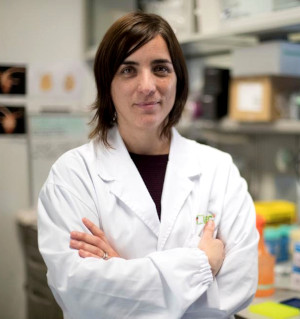
Dr. Nuria Montserrat
For the academic, the major challenge lies in ensuring that universities become true engines of equal opportunity and innovation, capable of responding to the social and economic challenges of the coming decade. Her action plan combines a comprehensive reform of the scholarship system, a reorganization of academic programs, and a firm commitment to applied research, with the goal of consolidating Catalonia as a leading center for higher education and science in Southern Europe.
Montserrat was one of 14 leading figures from the fields of research, higher education, and innovation selected to join the Council for Research and Innovation of Catalonia, an advisory body to the regional government on major strategic decisions regarding science and innovation. She is also a member of Grup Horitzó, a platform created by the Catalan Government and composed of about twenty prominent figures from research, innovation, and business, established to discuss and propose recommendations for R&D&I policy design. In 2020, she received the National Research Award for Talent, granted by the Government of Catalonia. Alongside her research work, Montserrat is also a prominent science communicator and served as curator of the City and Science Biennial held in Barcelona, focused on young female researchers under the title “100tífiques”. The initiative seeks to highlight the crucial role of women in science and technology—both in public and private research—and to inspire girls (and boys) to pursue studies in scientific and technological fields.